 I like winters here. The way a snowfall transforms a neighborhood, creating a beautiful hush and a luminous light that’s especially welcome in the dark of winter. It’s a time to slow down, be cozy, connect with family and sit in a comfy armchair with some cocoa and a good book. But by April I’m officially ready for the next season. And we all know Michigan likes to tease its cold-weary residents with a seemingly endless parade of false springs.
It’s especially tantalizing for those of us like me that try to eat what is in season locally as much as possible. Five months of root vegetables is a long time and given our northern location, friends elsewhere and the national media start talking about spring produce in April that is still a month or more away for us. But one thing about our overlong winters is that it really makes you appreciate when spring finally does show up. It’s really a call for celebration.
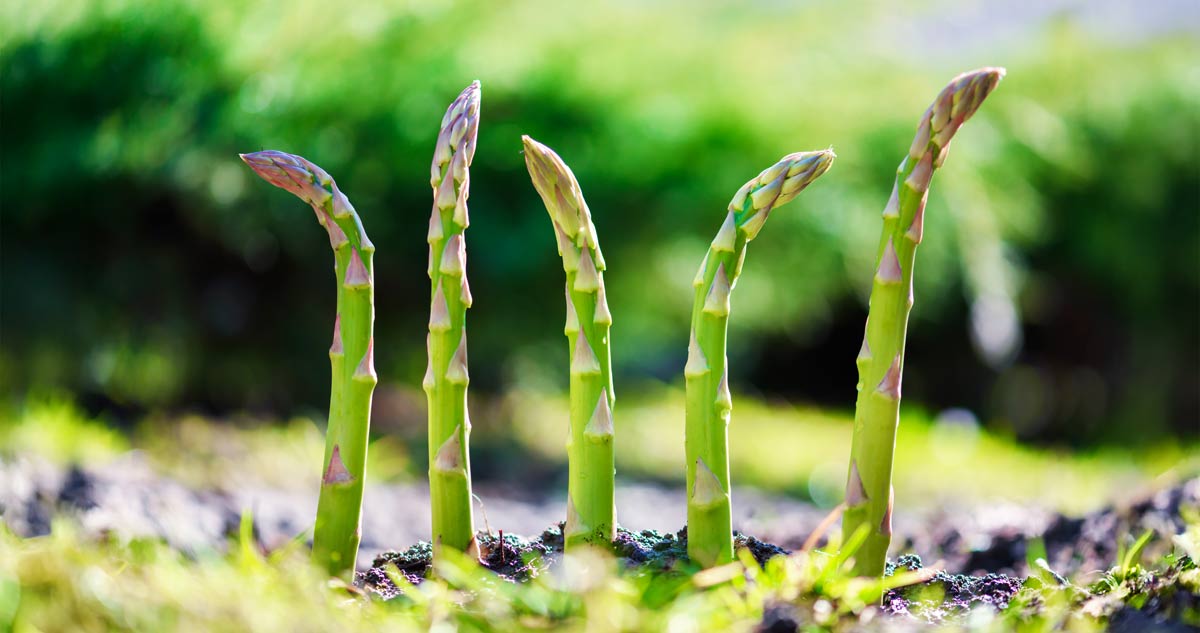
The earliest risers we see at the farmers’ market are asparagus and rhubarb, both of which are quick to pop up since they grow from crowns that live through the winter.
Asparagus can be white, green or purple. Fun fact…there is no white variety. It’s just normal asparagus that has been grown completely buried under dirt or black plastic so that sunlight never reaches it and it can’t develop a green color. Chefs tend to prefer tender, thinner stalks of asparagus. If you get a thick bunch it’s best to cut off the very end and possibly peel the bottom third, as chunky asparagus can be tougher and woodier.
Take care not to overcook your asparagus. It’s best when crisp-tender and not mushy. So most of the time it’s cooked over higher heat to get a nice char on the outside but not too soft on the inside. You can saute it, broil it or put it on the grill. Eggs and lemon are popular companions.
The red stalks of rhubarb poking out of the cold ground are another sign of spring. Rhubarb is technically a vegetable but given its sour flavor we tend to prepare it with sugar and treat it like a fruit. Think rhubarb pie or rhubarb compote atop vanilla ice cream. As befitting its ambiguous status, you can also use rhubarb in savory dishes like rhubarb chutney or chicken roasted with rhubarb and red onion. Its tartness is also a natural foil for the richness of duck. Paper thin slices of rhubarb make a great garnish for salads, fish or desserts. Just don’t eat any rhubarb leaves. The stalks get their distinctive taste from oxalic acid and there are much higher levels of it in the leaves. You’d have to eat a good amount to feel sick but it’s best to steer clear of those leaves.
Radishes are another early favorite due to their rapid growth. Early varieties can be ready to eat in just 21 days from planting. Radishes come in a rainbow of shapes and colors. We’re most familiar with the classic red round ones or the white and red cylindrical French breakfast radishes. But there’s also purple and green ones, watermelon radishes (which have layers of white and then green on the outside before giving way to a pink center) and even black skinned radishes. And that’s not to mention all of the Asian varieties, the most well known of which are daikon.
I think radishes are underutilized in this country. Of course, they’re great raw in salads or crudite platters but they’re equally good roasted. Roasting brings out their sweetness, which can be highlighted further with a drizzle of honey when they come out of the oven. And I would be remiss if I didn’t mention the classic French preparation of radishes. Slice and salt the radishes, schmear them with butter and top with more salt. Sometimes served alongside thin slices of baguette, the creamy richness of the butter cuts through the peppery taste of the radishes for an indulgent crunchy treat. The key to this simple dish is the quality of the ingredients – the freshest radishes along with the best European butter you can find and nice flaky salt. And don’t toss those tops. Radish greens are also edible, sauteed, stir fried or made into a pesto.
Besides our long wait, another reason to savor these early spring veggies is that Michigan likes to launch directly from spring into summer. Radishes you can find throughout the growing season, but local rhubarb and asparagus have short seasons so enjoy them while we’ve got them or wait until next spring.